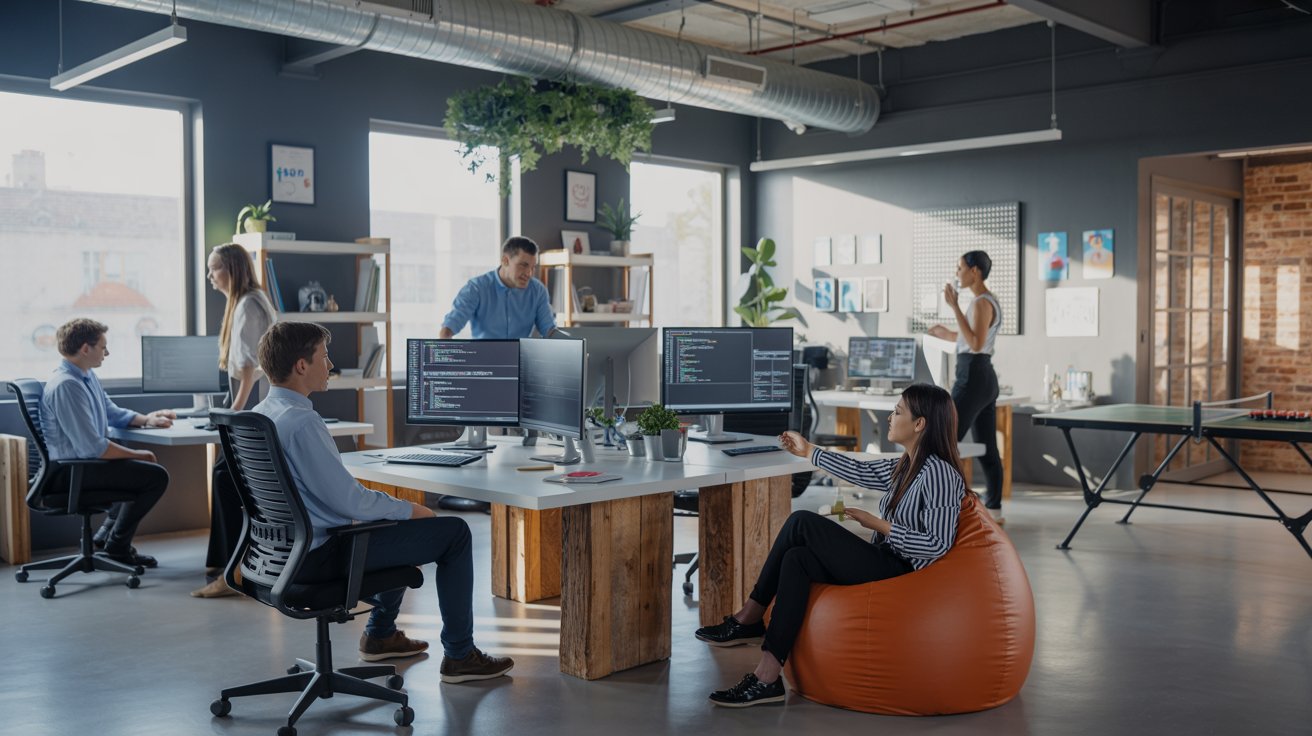
Startup Office Design: Balancing Budget, Branding, and Flexibility
Startup office design is a key element in the formation of company culture, team productivity, and brand image during the early growth of a business. As opposed to large set-in-their-ways companies, startups work with limited budgets, are in a stage of team growth, and have uncertain futures. This means office design is less a matter of aesthetics and more a question of what strategic decisions can be made that balance between cost effectiveness, brand messaging, and long-term adaptability. An effectively designed startup office will support change, promote innovation, and present a professional image at a low cost. To the founders and leaders, what is important is to produce a smart, flexible environment that, as they grow, remains practical and scalable and is in sync with the business vision.
Understanding the Unique Needs of Startup Workspaces
Startups approach things differently from big corporations. Teams are small, roles are flexible and cross-functional, and collaboration is frequent. This means the design of the office should support this way of working. Rather than fixed, rigid layouts, startups are better off with more flexible open layouts where employees are able to interact and make decisions quickly. Functionality should take precedence over aesthetics, but ideally, both are in harmony. Each of the design components should answer the questions: “Does this help with the daily tasks we do? Does this reflect who we are? Will this accommodate future growth?” Answering these questions ensures the office becomes an enabler of growth.
Designing on a Budget Without Compromising Quality
Budget is an issue for startups, which is a fact, but that doesn’t mean they have to sacrifice design. What we see is smart planning, which enables startups to invest their money where it matters. Instead of going all out on decorations, funds should be allocated towards basics like ergonomic furniture, efficient lighting, and durable materials. Also included are cost-effective strategies like using modular furniture, repurposing what you have, and choosing neutral base designs which may be updated as time goes on.
Also, we see that minimal structural changes in combination with smart layout planning may greatly improve functionality without breaking the bank. Strategic spending also sees to it that the office is at once functional and presentable as the company grows. In the middle of the design process, many founders turn to proven office design ideas for startups, which report on how to get the most out of what little budget you have.
Branding Through Office Design
Startups typically experience their brand’s first physical expression through their office space. When investors, clients, and new hires walk into the office, they experience the brand and form immediate impressions. Purpose, ambition, and professionalism are communicated through scouting the office, even in the early stages. Office branding doesn’t come at the cost of expensive finishes. Signage, graphics, and even wall colors and designs approach brand identity. A space should encapsulate a brand’s story, values, and culture, without the walls being overtaken and overwhelmed with words. Thoughtful integration of branding creates trust and improves internal culture.
Flexibility as a Core Design Principle
Flexibility is a must in the design of startup offices. Teams grow, roles transform, and work structures change very fast. By the time you get around to renovating that which is fixed in layout, it is out of date. Flexible design allows startups to roll with change without breaking the bank. We see in and out of moveable partitions, modular workstations, and multi-purpose areas which provide the adaptability. What was a meeting room today may be a collaboration space tomorrow. We have shared desks, hot desk option,s and furniture that may be reconfigured which sees space grow with the business. Also, we see that flexibility in design supports the hybrid work models, which are very much the norm in the startup world.
Key Features of a Successful Startup Office
- Open, collaborative layouts with clear circulation
- Modular and movable furniture systems
- Neutral base design with scalable branding elements
- Smart storage to reduce clutter
- Cost-effective, durable materials
- Spaces that support both focus and teamwork
Balancing Collaboration and Focus
While collaboration is key, what we also see is that startups have to enable focused work. We see that constant noise and interruptions play a role in reduced productivity and increased fatigue. In terms of office design, we see that it works best to present spaces for different work modes without overdoing it. We have quiet areas, acoustic panels, and dedicated focus zones which help employees when they need to concentrate. Also, we have open collaboration spaces that encourage brainstorming and teamwork. That balance we find is what makes the office a place that supports a variety of tasks throughout the day, which in turn improves overall efficiency and employee satisfaction.
Technology-Ready and Future-Oriented Design
While collaboration is key, what we also see is that startups have to enable focused work. We see that constant noise and interruptions play a role in reduced productivity and increased fatigue. In terms of office design, we see that it works best to present spaces for different work modes without overdoing it. We have quiet areas, acoustic panels, and dedicated focus zones which help employees when they need to concentrate. Also, we have open collaboration spaces that encourage brainstorming and teamwork. That balance we find is what makes the office a place that supports a variety of tasks throughout the day, which in turn improves overall efficiency and employee satisfaction.
The Role of Professional Expertise in Startup Offices
While many startups attempt to handle design in-house, professional help can avoid costly mistakes. Experts in the field know how to best use space, control budget, and plan for growth. They bring to the table that which a startup may not have experience with, which sees every square foot used to the fullest, and which aligns with the business’ goals. As startups grow out of the early stages and into structured growth, professional support in office interiors in Gurgaon has become a value add in putting together adaptable, brand aligned work spaces that change as the company does.
Conclusion: Designing for Growth, Not Just Today
Startup office design is a play between what the budget allows, what the brand is, and what the future holds. We see great results when we approach the workspace as an asset that improves productivity, attracts talent, and strengthens company culture. Instead of a once time set up, we should look at it as a living model which grows with the business. By putting functionality first, embracing flexibility, and thoughtfully integrating brand identity, we see startups create spaces that are efficient, inspiring, and which look toward the future. A well-designed startup office does not just provide a place for a team to work, it is a fuel for ambition, for collaboration, and for long term success.