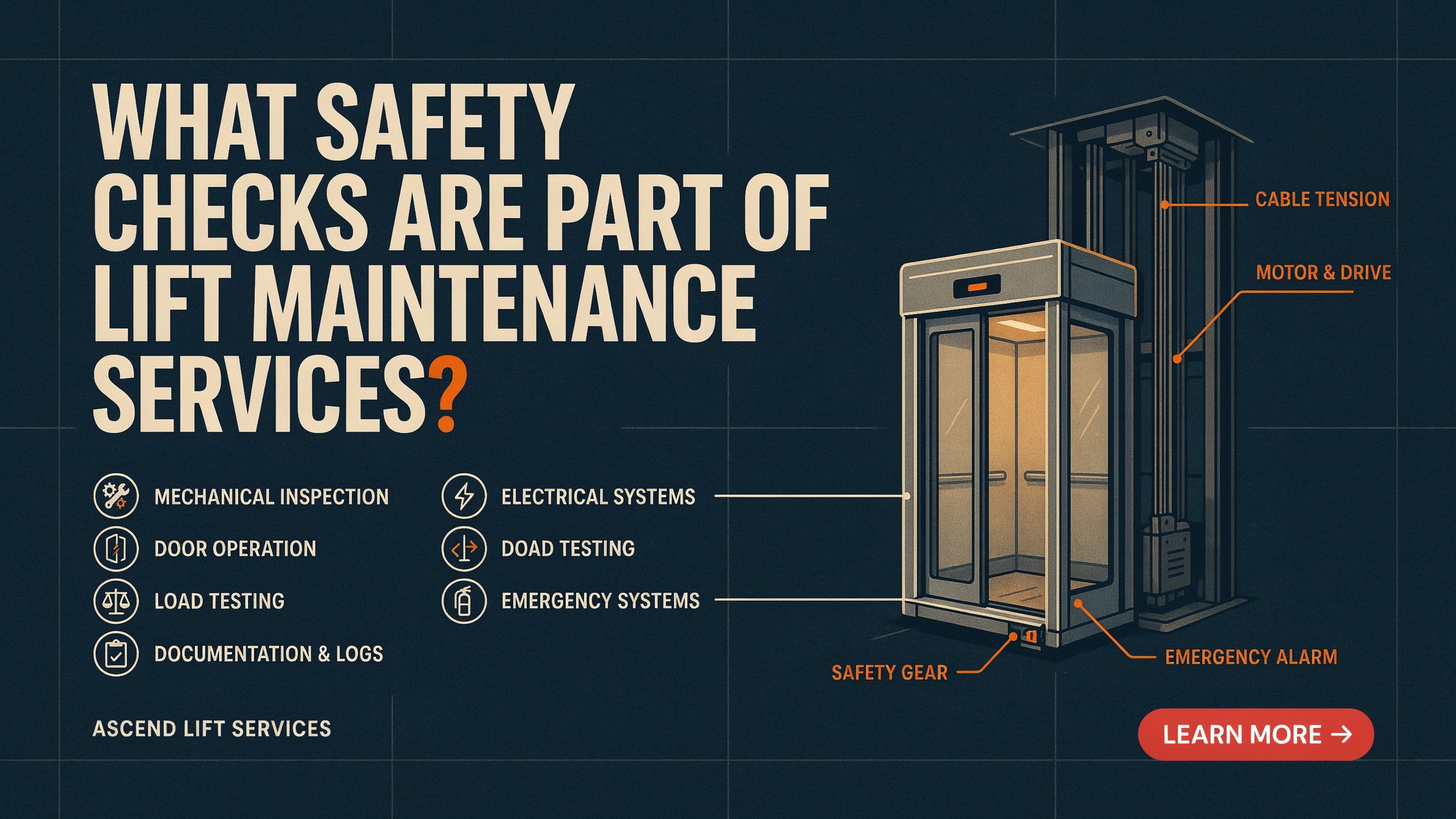
What Safety Checks Are Part of Lift Maintenance Services?
Lift inspections are a crucial aspect of the passenger safety, reliability of equipment and smooth running of buildings. Each lift includes mechanical, electrical and safety elements that need to be maintained. Regular use can lead to failure of door systems, brakes, controls, suspension parts and emergency equipment. Regular inspections enable competent technicians to spot irregularities and check equipment performance before small problems escalate into big operational or safety hazards.
A systematic inspection process takes into account the type of equipment, manufacturer recommendations, operating conditions and applicable regulations. Key parts of safety are checked, and past maintenance history and fault reports are looked at. Lift maintenance services provide a clear guideline to building owners and facility managers on this maintenance. All of this enables responsible lift management and safer day-to-day operation through accurate records, timely repairs and qualified technical assessments.
What Safety Checks Are Included in Lift Maintenance Services?
Typical lift maintenance activity involves a main lift system activity that is routine. During operation, technicians check the lift while working on individual parts for wear, damage or unusual performance.
Typical items are door checks, emergency systems, controls, brakes, drive equipment, levelling, electrical components and mechanical parts. Other areas that may be checked by a technician include the lift pit, shaft, machine room and other accessible areas. A regular check will provide them with a better understanding of the equipment’s condition. It also provides helpful information for future maintenance planning and fault investigation.
Landing Door and Door Interlock Checks
It is closely monitored during a maintenance visit that landing doors are in good condition. The technician verifies door operation at all the landings. They also examine tracks, rollers, locks and other parts.
Door interlocks are given special consideration, as they are part of a lift safety circuit. The lift cannot lift if a landing door is not secured. Thus, the interlock function is tested by technicians based on the equipment requirements.
There should also be a check on door reversal systems. Such systems need to react appropriately to the presence of an obstruction in the door’s path of travel. Any unusual noise or a lack of movement or irregular operation may be a sign of a developing fault.
Emergency Stop and Safety Device Checks
Care is taken to look at the safety devices, since they ensure passenger safety in abnormal situations. Technicians check emergency stop functions, safety switches and appropriate safety circuits.
They might also investigate overspeed protection and other safety features installed on the lift. The testing processes are dependent on the equipment and requirements. These checks should be performed by technicians, in accordance with the manufacturer’s instructions and relevant standards.
A safety device should never be neglected because the lift may seem to work just fine. A lift can operate for normal journeys with a fault in a safety circuit.
Lift Car Controls and Indicators
The controls in the lift car and at each landing are checked by technicians. They test buttons, indicators, switches, and other control functions.
The information displayed on the floor indicators should be correct when in use. A warning and instructions for operation should also be visible and legible.
Emergency communication equipment is also covered. The technician tests the alarm and communication functions when installed. These checks provide building managers with more assurance of the lift’s emergency response measures.
Brake and Drive System Checks
In the brake and drive system, the brake and drive system are all interconnected and deeply involved in lift movement and stopping. The technician checks the brake and looks for any signs of wear, contamination, abnormal noise or movement.
They also inspect the motor and drive equipment to see if any problems exist. If the vibration is too high, there are unusual noises, or the movement is not consistent, it may be a mechanical or electrical issue.
Important observations in these inspections should be recorded on maintenance records. If unusual operating conditions are detected by the technicians, further investigation may be required.
Levelling and Stopping Accuracy
To ensure the safety of the passengers and availability, levelling accuracy shall be considered. At normal operation, the lift has to terminate close to the landing level.
Stopping performance is monitored through routine operations by the technicians. They also may review the movement between floors for any anomalies in levelling.
A clear step up and down between the lift floor and landing can pose a risk of tripping. So, it is important that the technicians make note of any recurring problems with the levelling and determine the root cause of the problem.
How Are Lift Safety Components Checked?
You can’t just walk up to safety parts and inspect them. For various equipment and maintenance needs, technicians carry out operational checks and component checks. They inspect the safety circuits, switches, emergency systems and protective mechanisms and their condition. The inspection also takes into account any deterioration, damage, contamination or abnormal working of the product.
Safety Gear and Overspeed Protection
The protective gear and overspeed protection are crucial components of the protective system of the lift. A technician checks these parts following the manufacturer’s and relevant specifications.
If fitted, an overspeed governor will need special attention. It is inspected, and its related mechanisms are inspected during its scheduled maintenance.
There are different ways to test, depending on the lift design and governing requirements. Hence, it is advisable for building owners to use qualified people for the safety-critical examination.
Electrical Safety Checks
Regular service checks are important in ensuring that electrical components are in good working order. Techs inspect control panels, wiring, switches, terminals and safety circuits.
They search for loose connections, signs of damage, overheating, etc. They also test if electrical controls operate properly while in operation.
Electrical issues may cause operational challenges and safety issues. For this reason technicians should document problems and make proper suggestions about corrective action.
Emergency Communication and Alarm Checks
An emergency communication system has an important function in establishing communication between passengers and help personnel. Where alarms and two-way communication equipment are installed, they are checked by technicians.
Emergency lighting can also be operated for a test. Where the lift design involves backup arrangements, these need to be attended to.
Equipment varies according to installations. As a result, technicians need to evaluate each system with regard to the operating criteria and specifications.
What Mechanical Components Are Checked During Lift Maintenance?
In the lift operation, mechanical parts undergo periodic motions and loads. They can vary depending on the equipment design, age, environment and usage.
So, during the scheduled visits, technicians inspect mechanical parts that are accessible. They inspect for wear, abnormal motion, damage, contamination and other deterioration.
Cables, Belts, and Suspension Components
Operational loads are placed on suspension components, and this means they need to be checked on a regular basis. Technicians can check for visible wear, alignment, tension, ropes and belts, depending on the lift design.
The type of inspection method will vary according to the type of equipment. The technician should follow the manufacturer’s instructions to evaluate suspension parts.
If a major defect occurs, then it needs to be assessed properly before it continues to perform the lift. Relevant findings and follow-up should also be recorded in the maintenance records.
Guide Rails and Moving Components
Guide rails, and associated moving parts, affect the lift motion and riding characteristics. Technicians check accessible parts for wear, misalignment, contamination and excessive movement.
Other areas of the vehicle like rollers, sliding parts and lubrication points could also be inspected. But the lubrication needs vary from piece to piece of equipment.
The correct maintenance procedure for each component should be used by technicians. Inappropriate servicing will lead to extra equipment issues.
Machine Room and Equipment Areas
When the equipment is in a separate machine room, technicians check the equipment in the machine room. Motors, brakes, drive machinery, pulleys, controls and other components may be inspected.
They also search for odd noises, vibrations, hot spots, contaminated areas or any type of damage that can be seen. Routine duties in equipment areas can facilitate and make inspections easier and safer.
Different equipment configurations can be used for modern installations. So, technicians need to refer to the maintenance guidelines of the individual lift systems.
Lift Pit and Shaft Areas
There are a number of parts within the lift pit and shaft which should be inspected periodically. Technicians inspect all vulnerable areas for water damage, obstructions, visible damage, and other issues.
Pit lighting and related safety equipment might be discussed. Environmental conditions are important because moisture and contamination can impact equipment with time.
During the assessment process, significant findings should be documented, and further assessment should be arranged if necessary. The method of access should also be in line with the relevant safety specifications.
Are Lift Doors Included in Routine Safety Checks?
Yes, lift doors are a key component of regular safety checks. Door faults may impact passenger safety as well as multiple service delays. Locks, interlocks, tracks and safety functions are all checked as well as the door movement. They also watch the doors move over a number of cycles.
Checking Door Operation
Technicians check whether doors move smoothly and consistently. They look for unusual sounds, hesitation, vibration, or irregular movement.
Technicians test the smoothness and consistency of doors. They search for odd sounds, hesitation, vibration or irregular movement.
Cleaning, adjustment or other maintenance may be necessary for door tracks or moving parts. How this is done will depend upon the machine design.
If the fault is recurring, it should be further investigated. If the fault is not corrected and just reset again repeatedly, the fault may never be resolved.
Testing Door Reversal and Interlocks
Operational checks are performed on door reversal systems during maintenance. Technicians test and make sure that the system functions properly when an obstacle is encountered.
The interlocks as well should be tested carefully. These are a component of the safety system for not operating under unsafe door conditions.
When a test fails, technicians should document the failure and then perform the proper repair and retest steps. Safety functions cannot be achieved by successful operation from time to time.
How Are Lift Safety Checks Documented?
Keeping accurate records is a significant aspect of professional maintenance management. They document the history of inspections, defects, repairs and follow-up activities.
Well documented information also helps building managers to have a better understanding of frequent problems. It can help to identify trends that might not be seen otherwise.
Recording Maintenance Findings
Service records must give details of the lift and the date of the maintenance. They should also put in writing what components were inspected and what findings were made.
Technicians can record defects, abnormal situations, changes or made adjustments, and maintenance completed. Future reviews will be easier if there are clear descriptions.
Records to be kept in order and easily accessible to authorised persons. This method provides a history that can be relied upon for the equipment.
Recording Repairs and Follow-Up Work
The maintenance record should identify completed maintenance work and outstanding issues. Technicians can record the identified defect, recommended action, and the status of repairs.
If a replacement part is needed, it can provide the necessary information in the record. Follow-up dates can also be entered if additional work needs to be completed.
Clear records eliminate confusion among technicians, facility managers and all others involved. They also make good documentation for subsequent equipment re-evaluations.
Maintaining Inspection and Maintenance Records
The record of maintenance shall be the same for the duration of the lift. Teams can monitor faulty issues that repeat, resolved issues, inspection dates, and outstanding issues.
Record-keeping laws differ from state to state and from piece to piece. Owners of buildings and others should therefore abide by the relevant local regulations.
Historical information can be more easily found in digital records. But it’s important that teams also check entries for any inaccurate or incomplete information.
How Often Should Lift Safety Checks Be Performed?
Lift maintenance frequency depends on several factors. These include lift type, usage, age, operating environment, manufacturer guidance, and applicable regulations.
A busy commercial lift may experience considerably more operating cycles than a lightly used residential lift. Therefore, one maintenance interval cannot suit every installation.
Routine Maintenance Frequency
Regular servicing should be carried out according to the manufacturer’s requirements and applicable requirements. Other factors to take into consideration are the actual lift usage and operating conditions of the building.
If there are a lot of people using this device, it may need more surveillance. Intensive lift use is often found in hospitals, hotels, shopping centres and transport facilities.
Service history can be accessed by maintenance teams to guide future maintenance visits. If faults repeat, this can be a sign that it needs to be looked at in detail.
Periodic Inspection Requirements
Routine maintenance is not statutory inspection/examination. The maintenance is based on the condition of the equipment and on scheduled maintenance.
The statutory inspections are carried out in accordance with the requirements of the relevant jurisdiction. They can include specific inspection systems, competent persons or reporting systems.
The building owner must ensure that the requirements are applicable in their area. They need to be aware that routine maintenance does not imply that a required statutory examination is also being carried out.
When Additional Checks May Be Needed
After the unusual lift behaviour extra checks might be required. Symptoms may be unusual noises, vibration, inconsistent levelling, door errors or frequent shutdowns.
If there is a major repair or modernization project, then further inspection may be necessary. Operating conditions may change, creating other maintenance concerns.
Building managers are required to report odd behaviour as soon as it happens. When the problem is reported early, then it allows qualified technicians to evaluate the equipment.
What Safety Issues Can Lift Maintenance Services Identify?
A variety of equipment issues can be uncovered with regular inspections. Typical faults are door, brake, electrical and levelling issues.
Technicians can also detect excessive vibration, damaged parts, malfunctioning safety equipment and communication problems in the event of an emergency. Lift equipment can also be compromised due to water infiltration or from damage caused by the environment.
The importance of the each finding, depends on the equipment and operating conditions. Some problems might have to be addressed sooner rather than later and some problems might need to be corrected later.
This is due to the fact that the maintenance records are clear and these findings are easier to monitor. They also enable teams to monitor recurring issues over time, allowing them to identify trends and patterns.
What Should Happen When a Lift Fails a Safety Check?
Failure of the safety check shall be taken into due consideration before normal operation continues. The remedy will vary depending on the defect found and the severity of the defect. Certain faults are of specific interest for safety reasons. The advice of competent people and relevant regulations should be followed in the construction of buildings.
Removing Unsafe Equipment From Service
If a lift is found to be seriously unsafe, it could have to stay out of service. Only qualified staff should decide whether or not the equipment should return to normal operation.
Never turn off safety devices to keep a lift in operation. Any limitation on operation should comply with the technical and regulatory requirements.
Communication is important. If a lift is not available, building managers should notify the appropriate employees and users.
Assessing and Repairing the Defect
Techs evaluate the identified defect and identify the corrective action. Repairs should be performed according to the manufacturer’s instructions and standards.
Repair may include adjustment, replacement of components, electrical, and/or continued investigation into the issue. The solution is correct or depends on the equipment and defect.
Teams should keep notes of the work undertaken. They should also note any other conditions which need to be addressed in the future.
Retesting Before Returning the Lift to Service
A repaired lift should be tested before it is put back into service in the following manner: The testing range varies according to repairs required and applicable.
It is essential for technicians to ensure that the impacted safety and operating functions operate properly. Where applicable, required inspection and/or certification procedures should also be conducted.
The final maintenance record should show how the repair was carried out and the testing. This leaves a clear record of the event and action that followed.
What Should Building Owners Ask About Lift Maintenance Services?
It’s important that building owners assess the maintenance provider before entering into a maintenance contract. The provider needs to be aware of the type of lift, the equipment needed and the safety obligations that apply. Having a clear service scope also helps to manage expectations. Owners should inquire of the maintenance agreement and of what the defects are being addressed about.
Technician Qualifications
Owners should enquire about the training the technicians have received, as well as any experience in the industry. Appropriate technical knowledge and competence are necessary when working on a lift that is considered to be safety critical.
Requirements for qualifications/certification differ between jurisdictions and equipment types. So, check the credentials for the area a business is located in.
Knowledge of the particular manufacturer of the lift can also be crucial. Being knowledgeable about specific equipment can enable more accurate fault assessment.
Maintenance Scope
It is essential for the owners to check exactly what maintenance is being provided before choosing a provider. A schedule of routine inspections and maintenance activities should be clearly detailed in the agreement.
It should also specify any emergency functions, mechanical components and electrical systems, and safety device procedures. The scope should be in proportion to the actual lift installation.
A well-defined service contract will eliminate some uncertainty regarding responsibilities. It also provides a point of reference for building managers to look back on for completed maintenance.
Maintenance Records and Reporting
Maintenance reports should give a clear picture of the work completed, and defects identified. The owners should be aware of the time of the inspection and what issues were discovered by the technicians.
Reports should differentiate between what is a normal observation and what needs further action. This separation will enable facility management teams to be more easily followed up.
A consistent report also provides a beneficial equipment history. That history can be taken into account for future maintenance decisions and long-term planning.
Lift Maintenance Services vs. Statutory Lift Inspection
The purpose of routine maintenance and statutory inspection are different. Maintenance is about ensuring the equipment is technically up to a suitable operating standard by performing scheduled technical maintenance. Statutory inspection/examination is conducted when legal or regulatory requirements deem that an inspection/examination is necessary. The responsible authority may determine the person(s) to be inspected and the frequency of the inspection.
There are variations across jurisdictions and lifts. As such, it is important that building owners check the rules which apply to their particular installation.Routine maintenance doesn’t necessarily mean that all statutory requirements have been satisfied. Owners are responsible for keeping separate accounts if regulations would require it.
How Can Building Owners Prepare for a Lift Maintenance Visit?
Keeping information available helps building owners keep visits to the building more efficient. Routine checks in the past can provide the technician with information on recurring faults. If there are any unusual noises, vibrations, or door or stopping problems, they should be reported to the manager prior to the visit. These observations can help the technician focus on certain areas to be evaluated.
There should also be access to equipment areas according to the necessary site procedures. Additional context may be available in the manufacturer’s information and/or previous maintenance logs. A maintenance history makes information readily available to technicians to help them better understand the equipment. It also helps to provide uniformity in the subsequent service visits.
Conclusion
The regular lift inspection is a key element in the passenger safety and reliable running. Scheduled visits should include a check on doors, brakes, controls, electrical systems, safety devices and emergency functions. The maintenance records of the building should also be examined and any reported defects dealt with promptly by the building owners. The actual process of inspection varies depending on the type and manufacturer of the equipment, guidance from the equipment manufacturer, how the equipment is used and local regulations. Qualified personnel hired for lift maintenance services ensure safety checks are conducted in the proper technical procedure and following requirements.
FAQs
What safety checks are included in lift maintenance services?
Common checks cover doors, interlocks, brakes, controls, safety circuits, electrical components, levelling, suspension equipment, and emergency systems. Exact checks vary by lift type and applicable requirements.
How often should a lift be safety checked?
The required frequency depends on lift usage, equipment type, manufacturer guidance, operating conditions, and local regulations. Statutory inspection intervals may differ from routine maintenance schedules.
What happens if a lift fails a safety check?
Qualified personnel should assess the defect and determine the appropriate corrective action. Serious safety faults may require the lift to remain out of service until repair and required testing are complete.
Are routine lift maintenance and statutory inspections the same?
No. Routine maintenance focuses on equipment condition and scheduled servicing, while statutory inspections follow specific legal or regulatory requirements for the relevant jurisdiction.
Who should perform lift safety checks?
Appropriately trained and competent lift professionals should perform safety-critical maintenance and inspections. Owners should also verify qualifications and certification requirements that apply to their equipment and location.