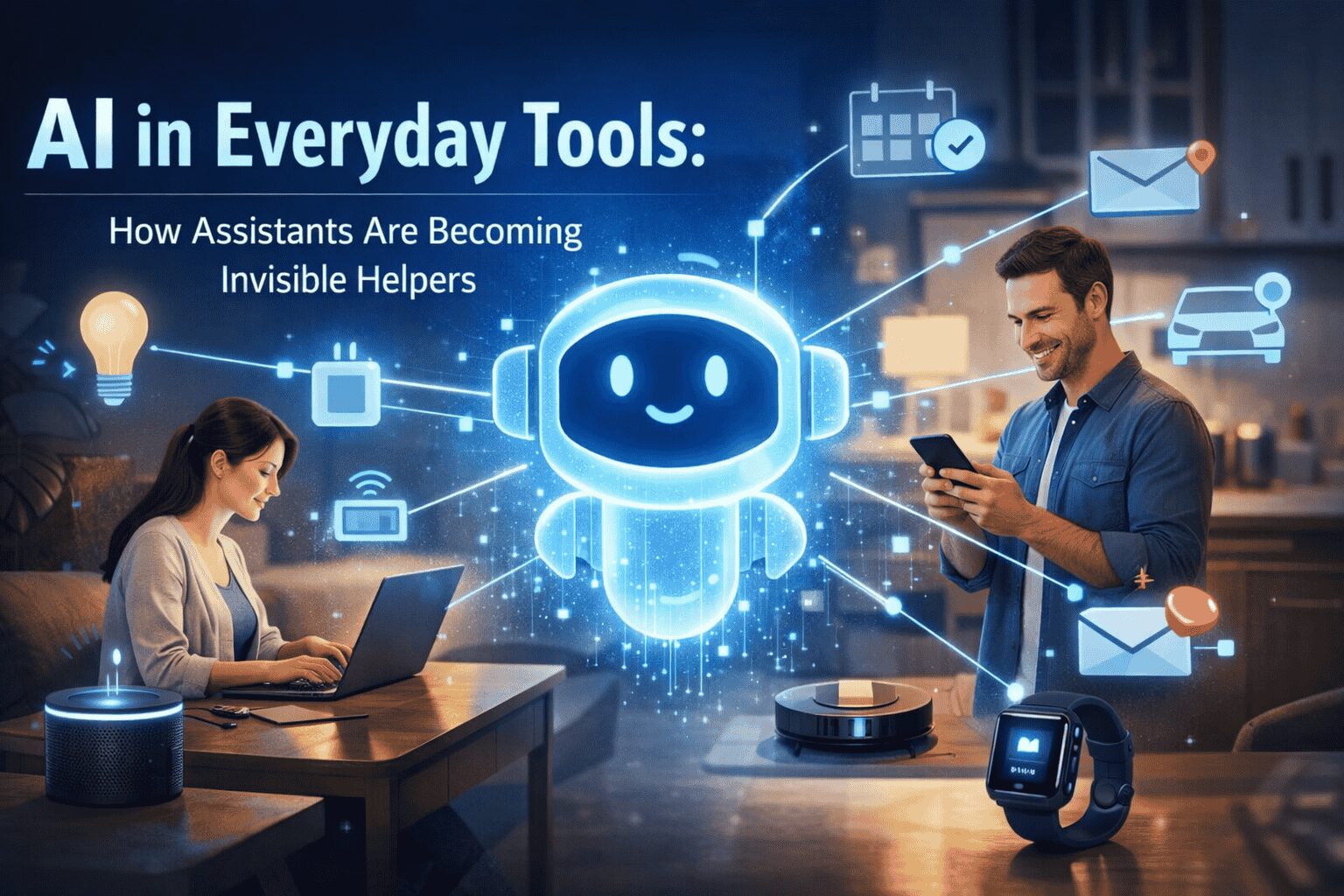
AI in Everyday Tools: How Assistants Are Becoming Invisible Helpers
AI which stands for Artificial Intelligence has become a common term that people use outside of technology conferences and science fiction films. The term describes computer systems which possess the ability to execute tasks that typically require human cognitive skills including language comprehension and pattern recognition and data-driven decision making. What makes AI interesting today is not just what it can do, but how quietly it has become part of our daily routines.
Many of the tools we use every day function like invisible helpers. People do not launch applications with AI on their minds but AI exists in the background to predict our next word during message writing and to manage our emails and to suggest suitable songs. The systems operate without user interaction while they provide time-saving features which handle tasks for users.
This essay explores how AI has blended into everyday tools to improve user experiences, automate simple tasks, and influence modern digital life in subtle but powerful ways. As more people notice its impact, many are even looking for the best artificial intelligence course to better understand the technology shaping their everyday experiences.
The Evolution of AI in Everyday Tools
Artificial intelligence first appeared in mobile devices and applications after people developed it. The first digital tools which appeared in the market during their initial period of existence functioned as basic programs. Computer systems operated according to prewritten commands which developers had created. The spell checker would show an underlined word because you misspelled it and the dictionary did not recognize your word. The first search engines operated by matching user input with precise word requests and returned webpages which contained those specific words. The system lacked any capacity to comprehend your intended message.
The world started to develop through its actual transformation process. People began to improve technology which became more adaptable to their needs. Organizations developed systems which started to function through their own ability to manage their operations. People started experiencing advanced technology because it treated them as users who required assistance through their work. People started using voice assistants through Siri Alexa and Google Assistant which allowed them to speak their questions and reminder requests. Streaming applications began to use their users’ previous selections as the basis for recommending new songs and television programs. Step by step, simple automated programs turned into more responsive and personalized assistants that fit naturally into everyday life.
Everyday Tools That Use AI
We use smart systems more frequently than we think. The systems operate silently in standard applications and devices to assist users with their daily activities.
- Communication Tools
The phone keyboard provides word predictions and automatic spelling correction functions during text input. Gmail and other email services offer complete phrase suggestions to users who write emails. These features enable users to send messages with greater speed and improved efficiency. Many websites also use customer support chat systems that can answer simple questions instantly, such as tracking an order or resetting a password, without needing a human agent right away.
- Personal Assistants
Voice assistants like Google Assistant, Siri, and Alexa have become normal parts of smartphones and smart speakers. People use them to set alarms create reminders check the weather or control lights and other smart devices at home. Users can obtain their required information by speaking instead of needing to navigate through various applications.
- Smart Search and Recommendations
Streaming platforms like Netflix and Spotify generate movie and song recommendations by analyzing users past viewing and listening patterns. Online stores like Amazon recommend products related to previous searches or purchases. The suggestions deliver a personalized experience because they showcase the specific preferences and behaviors of each user.
- Navigation and Daily Logistics
Map applications use traffic data to calculate current conditions while recommending optimal driving paths. Delivery services create their transportation routes through detailed planning to prevent any delivery postponements. The systems enable users to work efficiently throughout the day by providing time-saving solutions which function automatically.
Why AI Is Becoming “Invisible”
The integration of AI technology into existing applications and devices creates an experience that users perceive as invisible. The system operates without any visible interface because it was designed to work inside existing messaging applications and streaming platforms and navigation apps. People only care about results because they do not think about the underlying technology which produces those results.
People find it difficult to understand how the system operates because it functions out of their view. Users receive three different outputs which include suggested replies and recommended shows and faster routes to their home. The complex processes behind these results remain hidden which makes the experience feel simple and natural.
Systems continue to progress toward better comprehension of contextual information. A calendar application can suggest meeting times according to user availability while a shopping application recommends products based on user search history. In many cases, the tool predicts what a person might need before they even ask.
Because of this, the effort required from users is very low. Tasks feel easier and quicker, which makes the technology blend seamlessly into everyday life.
Benefits of Invisible AI Assistants
- Productivity gains
The most apparent advantage of this system results from its ability to save time. The system automatically handles multiple small tasks which include email sorting and meeting reminder creation and spam detection and photo organization. The various elements which might seem unimportant to the observer create a complete system which reduces work obligations while establishing better daily control for users.
- Personalization
Digital platforms feel more personal now. The shows suggested on streaming apps usually match what someone enjoys. Online stores recommend items based on past searches. Music apps create playlists that suit individual taste. This makes the experience smoother and less overwhelming.
- Accessibility
Voice commands and screen readers create better accessibility for people who find it difficult to type and read small text on devices. Speech-to-text and audio responses allow more independence and comfort while using technology.
- Constant improvement
Over time, these systems adjust based on how they are used. The more someone interacts with them, the better they respond. The gradual progress of the system improves common tools through better accuracy which requires no additional work from users.
Challenges and Risks
- Privacy and data concerns
The tools gather extensive user data which includes information about their online searches their physical movements and their purchasing habits. The application functions better through this feature but users experience discomfort because they lack knowledge about who can view their data and what actions these users perform.
- Bias in systems
The tools which people use to make decisions and receive suggestions produce outcomes which lack fairness. The system fails because its foundation relies on information which contains actual world errors and biases.
- Over-reliance on tools
People tend to begin depending on systems for their tasks. The dependence on tools makes it challenging to perform basic tasks which include remembering directions and doing simple calculations and writing without any writing prompts.
- Ethical issues
Automatic decision systems create situations where responsibility becomes ambiguous when failures occur. The situation creates difficulties because the resulting outcomes will bring significant effects to people.
Conclusion
Technology has developed from a visible interactive form into a hidden background operational mode. People now perform tasks such as typing emails and finding the fastest route and selecting movies with greater ease because they no longer need to think about it. The tools in this study create minor time savings which help users complete their daily activities with greater efficiency. Looking ahead, they will probably become even more common, helping people handle daily tasks more easily and becoming a normal part of how we live.

Ehtisham Ahmad, the mind behind techspicies.com, is passionate about technology, innovations and SEO-driven content that empowers readers to stay ahead in the digital world.
Founder & CEO
Ehtisham Ahmad, the mind behind techspicies.com, is passionate about technology, innovations and SEO-driven content that empowers readers to stay ahead in the digital world.