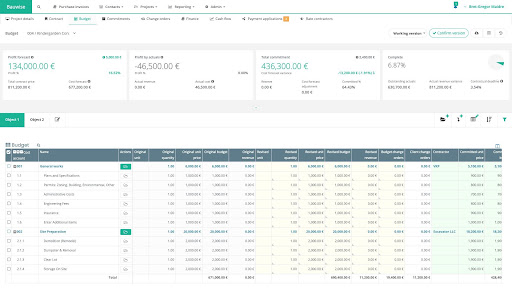
How Does Invoice Management Software for Construction Handle Project Billing?
Construction project billing is not a simple procedure of dispatching an invoice to the client. It is important that contractors keep tabs on contract values, work done, retainage, change orders, prior payments and outstanding balances. The project information needs to be updated and reviewed accurately each billing cycle. When teams are working with multiple projects, delays can occur in manual processes. Hence, contractors are more seeking billing processes that are more organized and are linked to financial and project data.
All contract information, progress billing, invoice information, approvals and payment tracking are combined in one specific workflow in modern construction billing. As opposed to having to manage billing information with multiple spreadsheets and documents, teams have the capability to do this from a central platform. Invoice management software for construction provides a structured approach to the management of invoicing. But technology will not outweigh a good sense of money. Construction workers still have to check work progress, budget expectations, breaches and supporting documents as well as billing data before applying for payment.
What Is Project Billing in Construction?
Project billing is the procedure to ask for the payment of the finished construction work. Construction billing usually comes with the requirements of the contract in contrast to the normal business invoices. Invoices are submitted by contractors on a timeline based on project milestones, percentage completed, schedules of values or agreed billing periods. There are some financial aspects that are taken into consideration in a typical progress billing process. This includes the original contract amount, approved change orders, work done, materials stored, work used for previous applications, retainage and the current outstanding amount due.
Progress billing may be based on the schedule of values. Breaks a contract into work categories and assigns specific values to these categories. These can then be used to monitor progress against them during the course of the project by estimators and project teams. Consistency of progress and financial records is crucial to accurate billing. Conflicts may arise if the contractor charges for more work than the job has accomplished. On the other hand, late billing can have a negative impact on cash flow and cause undue administrative stress.
How Does Invoice Management Software for Construction Handle Project Billing?
Construction billing software can be integrated with project contracts, schedules of values, project progress, retainage, change orders, approvals and payment records. That provides a controlled workflow from finished to invoiced work.
The general workflow follows several stages:
Contract setup → Schedule of values → Progress tracking → Billing calculation → Review → Payment application → Payment tracking
All stages add to the total invoice. Teams may check details of projects prior to submitting an application for an invoice or a payment application. This method will also provide a better audit trail of billing transactions. Project managers and accounting people can view the amount the contractor has charged, the amount received by the client and the unpaid bill.
How Does the Software Build a Construction Invoice?
Construction billing platforms usually collect data from the project records and process it to create billing documents. This actually depends on the software and the requirements of the contract. The system can link contract values to schedules of values, completed quantities, and approved changes and keep track of retainage calculations. This provides a well-defined structure for each billing cycle.
Setting Up the Contract and Schedule of Values
During the contract set-up phase, the financial arrangement for the project is set up. Teams can provide the original contract amount, contract terms, phases of the project, and cost codes. Measurable categories of work are then broken out of the contract in the schedule of values. The value of each line is assigned to it and added to the total value of the contract.
For instance, a commercial project can be broken into structural, electrical, mechanical, finishes and site projects. The categories can have their own value and progress percentage. A detailed schedule of values helps to serve as a reference during the project. It enables teams to track work completed against the amount billed for each period.
Tracking Work Completed
The amount of work that can be billed is based on progress tracking. The teams will be able to enter completed quantities, percentage completion, stored materials and previous billed quantities. For example, an estimator could document that one of the work categories is 60% complete. The billing system can then use the approved schedule of values to compute the value of the corresponding current.
Project managers need to check progress prior to the billing team application. The progress claimed can be evidenced by field records, project reports or approved documentation. Having accurate progress information helps to minimise disagreements between contractors and clients. Additionally, it establishes a better linkage between the field activity and financial reporting.
Calculating the Current Amount Due
The current amount due is dependent on some variables of the project. This could encompass current period work, previous applications, stored materials, retainage, approved changes and contractual changes. These numbers can be sorted, and the calculation shown beforehand with a structured billing system. This enables the accounting groups and project managers to check the amount. Invoice management software for construction may additionally preserve past invoices as well as current data. This will give you a snapshot of the project billing and make it easier to avoid recalculating all of the project billing for each billing period.
How Does It Handle Progress Billing?
Progress billing is a way for contractors to ask for payment when their job progresses. Unlike a single invoice, it is cumulative; each billing period will be added to the applications from the previous period. A project can be billed on a monthly basis or from the milestones or on another billing period mutually agreed to in the contract. The billing method must be the same as per agreement.
Billing by Percentage of Completion
A percent-of-completion billing method involves a relationship between the percent completion of work and the value of each of the schedule-of-values lines. Assume that a work category has a value of USD100,000. With 50% approved progress, the amount of the progress is $50,000 plus any other adjustments. The contractor is then responsible for previous billing, retainage and other applicable items. This results in the current payment amount. It is recommended to check the percentage of completion by the project team prior to submitting the application. The kinds of billable progress may depend on field conditions and contractual requirements.
Carrying Previous Billings Forward
When using progress billing, it’s important to have correct historical records. The amounts billed in the previous applications should be indicated in each new application, and the cumulative position of the project should be shown. Teams could end up charging the same amount as before if there is no history available. They can also exclude the amounts that the client has already paid. Centralized billing record is a single reference. Accounting teams are able to see the previous applications when preparing the current billing period. This is also a cumulative method which makes it easier to see how much of the contract is left.
Managing Stored Materials
There are construction contracts that give contractors the ability to charge for materials that are stored on or at approved locations and approved for reimbursement. Requirements that apply will be dependent on the contract. Materials stored should be recorded in teams. Purchase documents, delivery records, storage records, and other documents that are necessary could be included as supporting records. The billing team should verify that materials stored have been stored under the contractual conditions before adding these materials to an application. Documentation helps to have a better record for the client to review.
How Does Invoice Management Software Handle Retainage?
Retainage is a sum that is deducted from a contractor’s pay based on the contract. It offers a financial solution that is linked to the needs of the project completion process. This is because there is a variation in the retention rates between projects and contracts. Hence, it’s essential for billing teams to have accurate project-specific settings.
Calculating Retainage
Usually, the method of calculation is by an agreed percentage or a contractual method. The billing system can use the specified rate to calculate billing amounts, where applicable. Teams should check with the owner if there are any work categories that are eligible for retainage. Different rules may be set up in the different stages of the contract. Billing reviews will be easier if there are clear calculations. They also help to eliminate confusion in the payment applications of the accounting team’s reconciliation.
Tracking Retainage Balances
Retainage may be carried over from one billing period to another. It is important for teams to ensure they are able to record the withheld, released and outstanding quantity. A centralized record will give you an overview of these balances. The accounting staff is able to view retainage as a separate payment from the regular project payment. This information is invaluable, especially towards the end of a project. A “retainage” may be a large balance due and should be followed up.
Recording Retainage on Final Billing
Eligible retainage is typically released as part of the final billings. Conditions and timings are subject to the contract and any requirements which may apply. Before recording the release, a team should make sure that the project requirements are met. They should also keep a record of what amount has been retained and what was released.
How Are Change Orders Included in Project Billing?
It is possible that the scope of the project and the value of the contract might change once a change order is issued. With the approved changes, it is necessary to cascade these changes into the billing process. A change order can entail either the addition of new work or the subtraction of work, or a change in the quantity or price of the work. The billing team should be able to find out whether the requested changes have been approved or not.
Recording Approved Change Orders
The change order value, approval status, effective date and other project information should be documented for teams. If approved, the change may be incorporated into the terms of the revised contract. The billing team can then add an eligible work to its respective billing period. It will also be easier to have financial reviews in the future, when you have clear records. Contract changes can be reviewed and compared to the original contract by project managers.
Adding Changes to the Schedule of Values
Changes that have been approved may necessitate a new schedule of value lines. They can also expand upon other categories in other instances. This is dependent on the contract and the nature of the changes. Teams should ensure that there is clarity in the change order: billings value link. This will help ensure that any approved changes do not get separated from the main project billing record.
Preventing Unapproved Changes From Entering an Invoice
Anything subject to change that is not approved should not be automatically billable amounts. There can be multiple requests which are pending but not approved by the contract. An approval workflow can help to identify changes that are pending for approval and the approved changes. This difference provides accounting teams with more confidence when making payment applications. Also, it provides a better audit trail in case of any enquiry from the client regarding the amount in the bill.
How Does the Software Manage Invoice Approvals?
The invoice approval process is an essential quality assurance phase prior to invoice billing to the client. Multiple people may be involved in a construction project looking at various aspects of an application. Progress can be checked by project managers, and the accounting team can look at calculations and contract values. Some larger applications may be reviewed by senior management prior to being submitted.
Reviewing Billing Details
The reviewer should check the contract amount, progress of the work, past billing, retainage, change order and documentation. They should also tell how far they are to the end of the billable progress and how they are doing on the project. There should be more investigation done on any unusual difference before submission.
Creating an Approval Workflow
With a structured workflow, you have the ability to give review roles to particular team members. For instance, a project manager can check the progress before the financial details are checked by the accountant. This process results in clear accountability. It also helps minimize the chances of submitting billing papers that are incomplete or incorrect. Invoice management software for construction can manage the stages of invoicing. The teams can then check the applications that are still being considered and those that have been approved.
Maintaining an Audit Trail
Important billing activities and changes are recorded in an audit trail. It can display the date of an approval as well as who approved an application. This information will be helpful when there are questions regarding a previous billing period. Teams can follow up on changes instead of having to remember or link to individual emails. A detailed history also provides better financial notes for in-house audits.
How Does It Track Payments and Outstanding Invoices?
No! Billing continues after an invoice is sent to the client. Contractors should also be aware if the client approved, partially paid or fully paid all their invoices. Payment tracking gives visibility of the outstanding project receivables. It also can indicate which invoices need follow-up.
Monitoring Invoice Status
Some billing systems could have a status of draft, submitted, approved, partially paid, paid or overdue. The statuses provide visibility into project billing activity at a glance to accounting teams. They are able to locate a file within multiple files without having to search through them for the invoice they need to attend to.
Tracking Accounts Receivable
In the accounts receivable, it is a record of the amount of money that is yet to be received. These balances can be linked to individual contracts with project-level tracking. For a contractor who is working on multiple projects, this visibility is important. Finance teams can view amounts that are still outstanding without having to merge data manually. Invoice management software for construction also can link invoices to project data. This will make it convenient to keep track of the billing history and the outstanding amount at a glance.
Monitoring Overdue Construction Payments
Delayed payments may put cash-flow constraints on the contractor. Teams require an accurate way to determine the invoices that are late.A payment platform can set up the due dates and payment statuses. Some will offer reminder or follow-up features too. However, the terms of payment and collection should be in accordance with the applicable contract. Automated reminders are not a substitute for good business communication and contractual practices
How Does Construction Billing Software Connect With Accounting?
The financial documents that are needed for construction billing and accounting are similar. Linking these processes can minimize data duplication and ensure data consistency. The accounting staff require accurate invoice amounts, payment records, balances of retained money and project details. Financial information should be visible to the project teams, too.
Connecting Project Billing With Job Costs
There are links to project budgets, job costs, contract values and financial reports.This link enables teams to make a comparison between project costs and billed revenue. It can also be helpful to go over the financial performance of a project.
Reducing Duplicate Data Entry
Different systems can have the same data entered multiple times by teams. The more entries you have, the more opportunities there are for mistakes. A reduction of repetitive transfers between systems can be achieved through accounting integrations. But you should check with the contractors to find out what data is being exchanged by each integration.
Keeping Financial Records Consistent
Regular financial records are important for accounts receivable, retainage, revenue monitoring, and reporting the projects. Teams need to have agreed upon protocols for evaluating synchronized information. Financial data can still impact critical business decisions in automated connections, and these still need to be monitored.
What Documents Can Construction Invoice Software Manage?
Construction billing can’t be just a simple invoice. Clients can ask for applications, schedules of values, lien waivers, supporting documents and records and more. These documents can be kept organised and receive a better billing review.
AIA-Style Payment Applications
There are many construction projects that are based on payment application forms that are used in a standard AIA format. G702 summarizes the payment application, and G703 gives detailed information about the schedule of values. These requirements will depend on the project contract. For contractors, it is always best to follow the documents and procedure as outlined in the client’s or the contract’s guidelines.
Lien Waivers and Supporting Documents
Depending on the requirements of the project and the jurisdiction, construction payment applications can include lien waivers. The other supporting documentation may be receipts, progress records, delivery records, inspection information, or approved change orders. The billing team should verify with the contract before submission what kind of documents it needs.
Invoices and Payment Records
Having payment records on your invoices makes for a fuller financial history. Teams are able to see the original bill, bill adjustments, payments made and the balance remaining. This record will be helpful in account reconciliation and project closeout.
What Are the Benefits of Using Invoice Management Software for Construction?
Digital billing platforms can help to establish a more structured environment for the financial processes in construction. The value will depend on the features, requirements of the project and information that the contractor is able to provide.
Some benefits of doing so can be:
- Centralized billing information
- Better invoice visibility
- Consistent calculations
- Easier progress billing
- Retainage tracking
- Change order visibility
- Clear approval records
- Payment status monitoring
- Accounting integration
These features can help cut down the administration hassle that can be present when teams are managing multiple projects. But contractors need to check the exact working requirements and should not take anything for granted—not that all platforms have the same capabilities.
What Should Contractors Check Before Choosing Invoice Management Software?
When selecting billing software, it’s crucial to look at existing project workflows. Contractors need to review what they could need and what they can get and look at all of the features. A platform should match the company’s contracts and project types, accounting systems, and group roles.
Project Billing Requirements
It’s important for contractors to ensure that the platform supports the preferred billing procedures. This could be through progress billing, milestone billing, schedules of values or other processes used in the contract. They should also be sure to check how the system performs with several projects running concurrently.
Retainage and Change Order Controls
Retainage and change orders can significantly affect project billing. Contractors should check whether the platform allows project-specific rules and approval processes. The system should distinguish approved changes from pending requests.
Accounting Integrations
Existing accounting systems should remain part of the evaluation. Contractors should verify which data can move between the billing platform and accounting software. They should also understand whether synchronization occurs automatically or requires manual review.
Security and User Permissions
Billing systems may include delicate monetary data. Contractors need to check the rights, access, backups and security of the user. They should also have an understanding of how the provider manages data recovery and system uptime.
Scalability and Pricing
The price of software varies among users, features, projects and software subscription models. For contractors, it is important to take into account what is currently needed and what may be necessary in the future. In the event of a project growing in scope or project team, a platform should not become impractical.
Common Project Billing Problems Software Should Address
Billing issues are common in construction companies. These problems can be exacerbated if multiple projects are maintained on various spreadsheets and document management systems.
Common problems include:
- Missing invoice information
- Incorrect retainage calculations
- Unapproved change orders
- Duplicate data entry
- Lost billing records
- Poor payment visibility
- Spreadsheet version conflicts
- Delayed invoice approvals
Organizing these processes with a digital platform can happen, but a digital platform can’t automatically correct inaccurate project information. Teams must confirm the progress, contract terms, amounts, price and documentation. Human review is still necessary since a decision that impacts billing can have contractual and/or financial ramifications.
Conclusion
Accurate records of progress, contract details, calculations of retainage, approved changes and tracking of payments are part of project billing. When contractors are juggling several projects and billing cycles, it can become challenging. A centralized workflow provides transparency into finances and eliminates repetitive admin. Invoic e management software for construction can help automate these billing processes. Given that, however, it’s important that the project team and the accounting team are experienced and that they continue reviewing the documents, progress, calculations and contractual requirements before making any payment applications.
FAQs
How does invoice management software handle construction project billing?
The software can connect contract values, schedules of values, progress information, retainage, approved changes, and payment records. It creates a structured workflow for preparing, reviewing, submitting, and tracking project billing.
Can construction billing software handle progress invoices?
Yes, many construction billing platforms can manage progress invoices based on percentage completion or scheduled work. They can also track previous billing, stored materials, retainage, and remaining balances.
Can invoice software track retainage?
Many platforms can calculate and track retainage according to project settings. Teams can monitor withheld amounts, releases, and outstanding retainage across billing periods.
Can construction invoice software manage change orders?
Yes, platforms may connect approved change orders with revised contract values and billing records. Teams should still verify that changes have received the required contractual approval.