How Smart Packaging Technology Is Changing Dessert Spreads for Bakers
Packaging is often thought of as the step in making a product: put the product inside, close the package, put a label on it, and get it ready to send out. When the product is a spread that can be affected by temperature, thick, too liquid, or likely to split, packaging can be really important to make sure it arrives in good shape.
New packaging technology has brought kinds of containers and shields, ways to get the product out, signs that the package hasn’t been opened, and labels that can do more than just say what something is. How does it affect dessert spreads for bakers? Packaging has become more involved in the product development cycle, and is increasingly being designed into the product rather than simply being a vessel for packing it.
Packaging That Considers Product Properties
The properties of a spread vary depending on its contents. Chocolate spreads, caramel or fruit fillings, nut preparations or flavoured creams – each type of product has differing physical as well as chemical properties which may be affected by oxygen, moisture and temperature. Packaging technology now considers the product needs during development.
The choice of material is important for preserving a spread. Barrier properties of plastic, laminates, coated paper or glass containers prevent unwanted interactions with the filling. The aim of packaging is to preserve the desired consistency, aroma and appearance for the product’s shelf life.
A spread which has a noticeable difference in texture from one batch to the next will affect the consistency and appearance of a filled cake or pastry. For a dessert spread for bakers, this means that the packaging must also be consistent.
Smarter Dispensing for Better Bakery Results
Conventional dispensing containers such as jars with wide mouths are familiar to bakers. They offer good accessibility but are not optimal for dispensing large amounts of product in a single action.
Packaging technology includes various methods of controlled dispensing – squeeze tubes, pumps, nozzles or controlled openings in the pack. They enable bakers to dispense a specific quantity of spread directly onto dough, biscuit bases, cakes, pastries or other products. Controlled dispensing has clear advantages.
Waste is minimised with no dripping or spills. It also ensures consistency across multiple batches of baked goods. Dispensing the exact quantity of spread reduces the risk of batch errors when preparing large quantities of filled products.
The size and shape of the dispensing opening also affect the quality and appearance of the final product. A thick chocolate spread or nut filling requires a larger dispensing hole than a runnier fruit preparation. Packaging engineers design the dispensing system to suit the properties of the product.
Tamper Evidence Assures Quality and Consistency
Packaging acts as a seal for the contents of a spread. Tamper-evident technology offers additional protection by indicating if the pack has been opened or compromised at any point before reaching the consumer.
Induction seals, breakable caps, tear strips, shrink bands or specially designed closures are applied to the package. Tamper evidence adds an extra layer of security to food packaging. It reassures customers that the product has not been tampered with or contaminated between production and sale.
For dessert spread for bakers, this is particularly important. It is often supplied in large packs for multiple uses. Tamper-evident packaging assures a professional baker that the product they are using has been stored correctly and safely.
It also reduces the risk of accidental contamination when multiple packs are in use. If a pack remains sealed until it is needed, the risk of cross-contamination is minimised.
Smart Labels Inform and Identify the Contents
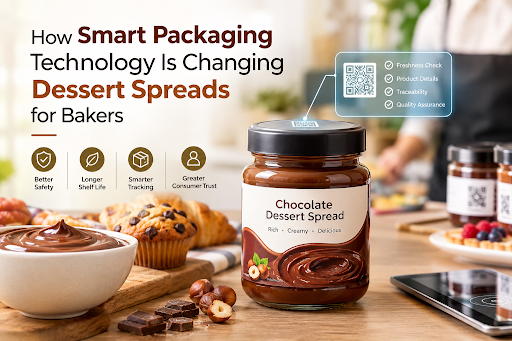
Smart packaging technology offers additional functionality beyond conventional labels. Digital information such as QR codes or other identifying marks can be included. How does it benefit a dessert spread for bakers?
A baker scanning a QR code on a pack can view information about storage conditions, ingredients, allergens, suitable applications and possibly even recipes. The digital identification of a pack is useful to a production bakery. It enables faster identification of the product, its ingredients and the correct storage conditions.
This becomes more important where multiple types of spread are used. Smart packaging prevents errors when selecting the wrong pack for a particular application.
The importance of clear labelling extends beyond the baker’s perspective. As consumers become more interested in where their food comes from, smart labels enable a dialogue between manufacturer and consumer.
They provide information about the product which would normally only be included in a detailed product datasheet or technical specification. At the same time, they act as quality assurance that the product has been stored correctly.
Packaging Technology Extends the Shelf Life of Bakery Ingredients
The shelf life of a food product depends on its formulation and the packaging which protects it. Oxygen, light, moisture and temperature affect the rate of deterioration of a food product. The design and material of the packaging can have a major impact. Oxygen resistant materials will slow the rate of oxidation. Light sensitive ingredients may require protection from exposure to light. Other ingredients such as sugar may be affected by moisture and need to be kept dry.
Closure and opening systems also play a role in preserving the quality of the spread. Once a pack is opened, the fill is exposed to oxygen again with every use. A resealable closure keeps the product protected between uses. It is particularly useful for large packs where the full contents cannot be used at once.
The right type of closure extends the shelf life of a spread. For a dessert spread for bakers, this is important.
Packaging Efficiency Is Becoming More Important Than Ever
Efficient packaging ensures that the product is protected while minimising material usage. Modern packaging technology emphasises the importance of material efficiency, recyclability and reduced weight for transport. How does it affect dessert spreads for bakers?
Lightweight packaging reduces the weight of the product. It reduces the overall weight of the shipment and the amount of material used for each pack. Optimised packaging shapes also increase efficiency by reducing wasted space on a pallet. More packs can fit in one shipment, reducing the number of deliveries needed.
Some manufacturers favour recyclable materials or reduced complexity of packaging structures. It reduces waste at the end of the product’s life cycle. However, the protective qualities of packaging must be balanced against its environmental impact.
The choice of packaging for a spread is determined by its physical properties. It needs to be appropriate for the type of product it contains. Deterioration of the fill will lead to increased waste due to spoilage or incorrect application of the spread. Reducing material usage is not an advantage if a weaker packaging structure causes more food waste.
Packaging and Bakery Productivity
Time is one of the main costs in bakery production. Any factor which reduces the time spent on a task is automatically worth considering. Packaging which facilitates the use of the product can reduce time spent dispensing and applying it to a product.
A poor dispensing system which requires repeated dispensing, scraping of the pack or leaving behind unwanted residue can add hours to a production schedule. An optimised dispensing system enables faster and more uniform application of a spread.
Efficiency is not the only benefit of optimised packaging. The overall shape and size, presence of handles or other features and dispensing system need to be suitable for use with gloves or wet hands.
It is easy to overlook these aspects, but frequent use of one type of packaging (or spread) means that every small advantage adds up. The reduced effort and faster dispensing rate can make a noticeable difference to the productivity of a commercial bakery.
Choconutri’s Brand Positioning
Choconutri is situated in the modern dessert spread market which is experiencing a growth in popularity. The brand is focused on providing high-quality products which also address practical needs of professional and commercial bakers.
The brand’s overall strategy emphasises the benefits of an optimised dessert spread for bakers. Careful product development ensures that the spread is consistent in quality and application. Packaging technology complements the spread by minimising wastage and facilitating use in a bakery environment.
What Can Packaging Do for Your Spread?
Modern packaging technology enables new possibilities for food packaging. The product is no longer the sole consideration – the end user’s needs are taken into account during packaging design.
Improved barrier technologies such as oxygen resistance provide additional protection for the spread. Dispensing systems facilitate quicker and more uniform application. Tamper evident technology assures the quality and consistency of the product.
The importance of packaging is growing and will continue to change the dessert spread market. As more attention is given to the sustainability of food packaging, new opportunities will emerge for optimised, efficient packaging structures.
Conclusion
Smart packaging technology offers new benefits to dessert spreads for bakers. Optimised dispensing, tamper evidence and smart product identification can all be included in an effective packaging system. Barrier properties of the packaging protect the quality of the spread. Advanced closure systems and dispensing methods reduce waste and facilitate use in a bakery.
The best use of smart packaging technology will always be dictated by the needs of the spread and its end users. As commercial bakers increasingly demand consistency and efficiency, these aspects will become more important than conventional presentation of the product.
For dessert spreads for bakers, packaging technology will continue to evolve to meet the changing demands of the bakery industry. It will continue to move beyond its traditional role to become an active part of the production process.